“Should I get a softener or a filter?” is one of the questions we hear most around the Las Vegas Valley. It makes sense. The two words get used like they mean the same thing, and the equipment can look alike sitting in a garage. But a water softener and a water filter do very different jobs, and buying the wrong one can leave you with the exact problem you were trying to fix.
Jason Miller has more than 24 years of plumbing experience, and he walks homeowners through this choice all the time. Here’s a plain-English look at water softener vs water filter: what each one does, what it doesn’t do, and how to figure out what your home actually needs.
First, a Quick Word on Las Vegas Water
Most of the valley’s tap water comes from Lake Mead and the Colorado River. Along the way it picks up a lot of calcium and magnesium, which is what makes water “hard.” By the common industry scale, anything over about 10.5 grains per gallon counts as very hard, and valley water sits well above that line. Your water provider’s annual water quality report lists the current numbers for your area.
The important part: the water is safe to drink and meets federal standards. Hardness is mostly a plumbing and appliance problem. Taste is a separate issue. That difference is exactly why softeners and filters exist as two separate things. (For the full story on what hard water does to your home, see our Las Vegas hard water guide.)
What a Water Softener Does
A traditional water softener uses a process called ion exchange. Water flows through a tank filled with small resin beads. Those beads grab onto the calcium and magnesium and swap them out for a small amount of sodium (or potassium, if you prefer). Every so often, the softener rinses the beads with salty water from the brine tank to “recharge” them. That’s why softeners need salt.
What a softener is good for:
- Stopping scale buildup inside pipes, valves and fixtures
- Protecting tank and tankless water heaters from mineral buildup
- Fewer white spots on glasses, shower doors and faucets
- Soap and shampoo that lather more easily
- Longer life for faucet cartridges, toilet fill valves and appliances
What a softener does not do: It isn’t designed to improve taste or remove chlorine. Softened water can taste about the same as before, or slightly different.
A softener is usually installed where the main water line enters the house, often in the garage, so it treats all the water you use.
What a Water Filter Does
“Filter” is a broad word. It covers a few different types of equipment, and each one targets different things.
- Sediment filter: Catches sand, rust flakes and other particles. It protects other equipment but doesn’t change hardness or taste much.
- Carbon filter (whole-house or under-sink): Reduces chlorine and chloramine, which helps with taste and odor. It does not remove calcium or magnesium, so it won’t stop scale.
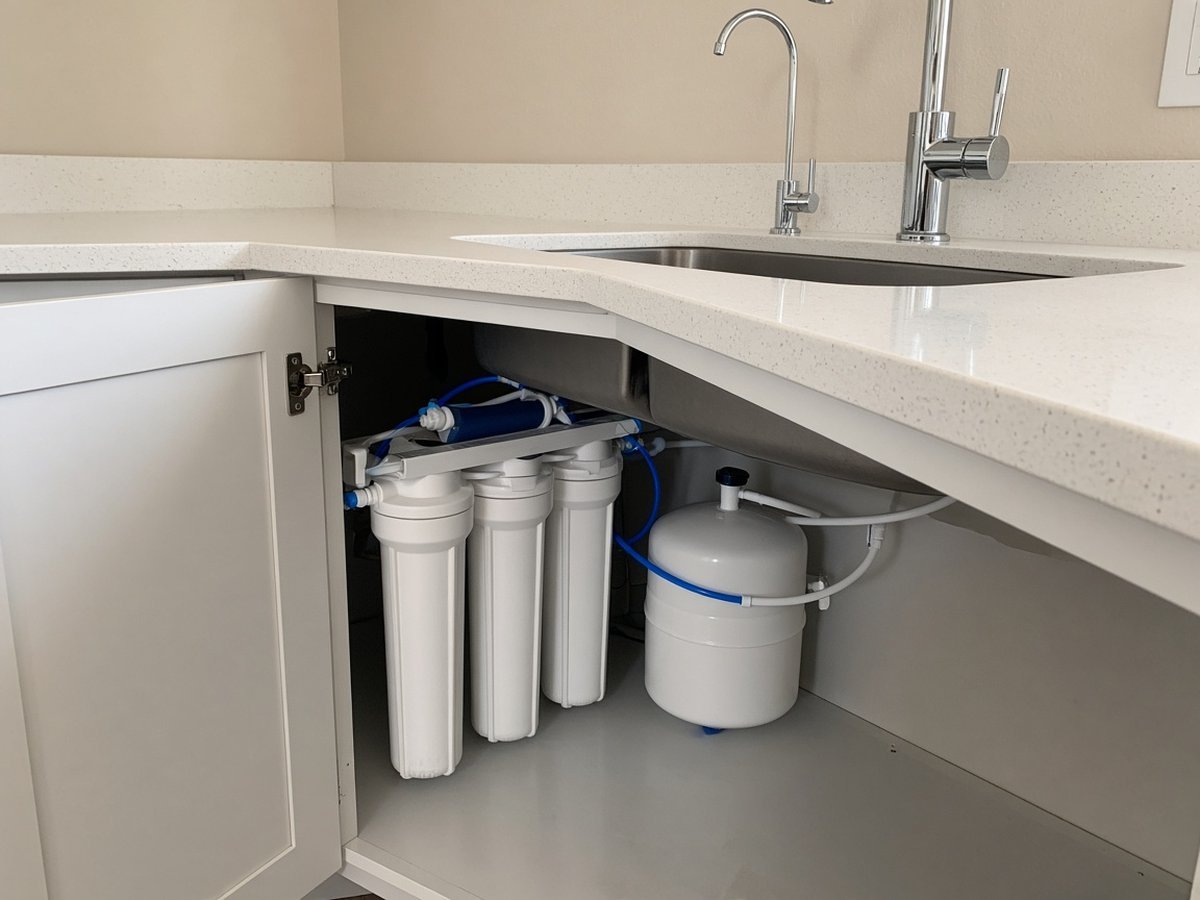
- Reverse osmosis (RO): Pushes water through a very fine membrane that removes most dissolved solids, including hardness minerals and sodium. It’s usually a compact under-sink system with its own faucet for drinking and cooking water.
RO is the one exception to the “filters don’t fix hardness” rule, but it’s built for a few gallons a day at one tap, not for the whole house. It won’t protect your water heater or shower valves.
What about salt-free conditioners and “water descalers”?
These are a different technology. Instead of removing minerals, they aim to change how minerals behave so they’re less likely to stick to surfaces. They don’t need salt and they don’t remove hardness, so you won’t get the slick “soft water” feel. Some homeowners like the lower maintenance. Results vary from home to home, so it’s worth talking through what you expect before choosing one.
Softener vs. Filter at a Glance
- Main job of a softener: Removes hardness minerals to prevent scale throughout the house.
- Main job of a filter: Improves taste and odor and reduces certain contaminants. RO also removes most dissolved minerals at one faucet.
- Where it goes: Softeners and whole-house filters go on the main line. RO usually goes under the kitchen sink.
- Upkeep: Softeners need salt added and an occasional checkup. Filters and RO systems need cartridges changed on a schedule.
Why Many Las Vegas Homes Use Both
Here in the valley, the most common setup we see working well is a softener for the whole house plus an RO system at the kitchen sink. The softener handles the scale problem everywhere: water heater, showers, toilets, dishwasher and faucets. The RO system gives you great-tasting water for drinking, coffee, ice and cooking. It also takes out most of the small amount of sodium the softener adds, which some people like.
Some homes also add a carbon filter ahead of the softener to cut chlorine taste and smell at every tap. It depends on what bothers you most and how much maintenance you want.
Which Do I Need? A Simple Checklist
A softener is probably your answer if:
- You see white crust on faucets, shower heads or fittings
- Your water heater pops or rumbles, or your tankless unit shows scale errors
- Faucets drip again soon after being repaired
- Glasses come out of the dishwasher spotty
A filter or RO system is probably your answer if:
- You don’t like the taste or smell of your tap water
- You’re buying bottled water for drinking and coffee
- You notice a chlorine smell when you run the tap
You may want both if: you checked boxes on both lists. That’s very common in Las Vegas and Henderson homes.
If you’re putting in a new water heater, it’s a good time to think about a softener too. Scale is one of the main reasons water heaters wear out early here. Our water heater and tankless service page has more on that.
Frequently Asked Questions
Will a water filter stop hard water scale?
Most won’t. Sediment and carbon filters don’t remove calcium or magnesium. Reverse osmosis does, but only at the faucet it’s connected to. To protect the whole house from scale, you need a softener.
Does a water softener make my water safe to drink?
Las Vegas tap water is already safe to drink and meets federal standards. A softener is about protecting plumbing and appliances, not about making water safe. If you want better-tasting drinking water, an RO system at the kitchen sink is the usual choice.
Can I drink softened water?
Yes. A properly set softener adds only a small amount of sodium. If you’re watching your sodium, use RO water for drinking and cooking, or ask about using potassium instead of salt.
Is a salt-free conditioner the same as a softener?
No. A salt-free conditioner doesn’t remove hardness minerals. It’s designed to change how they behave. It’s a different technology with different results, so it’s best to compare both before you decide.
My home doesn’t have a softener loop. Can I still get one?
Usually, yes. A loop can often be added at the main line, typically in the garage. We look at your layout first and explain your options.
Not sure whether you need a softener, a filter or both? Las Vegas Water Experts is a family owned and operated, licensed, bonded and insured plumbing company serving Las Vegas, Henderson and the surrounding valley. We’ll look at your water, your plumbing and how your household uses water, then give you a straight answer. See our water softener and filtration services, call 702-577-5505, or send us a note through our contact page. NV LIC# 0095727 (C-1D Plumbing).
Leave a Reply