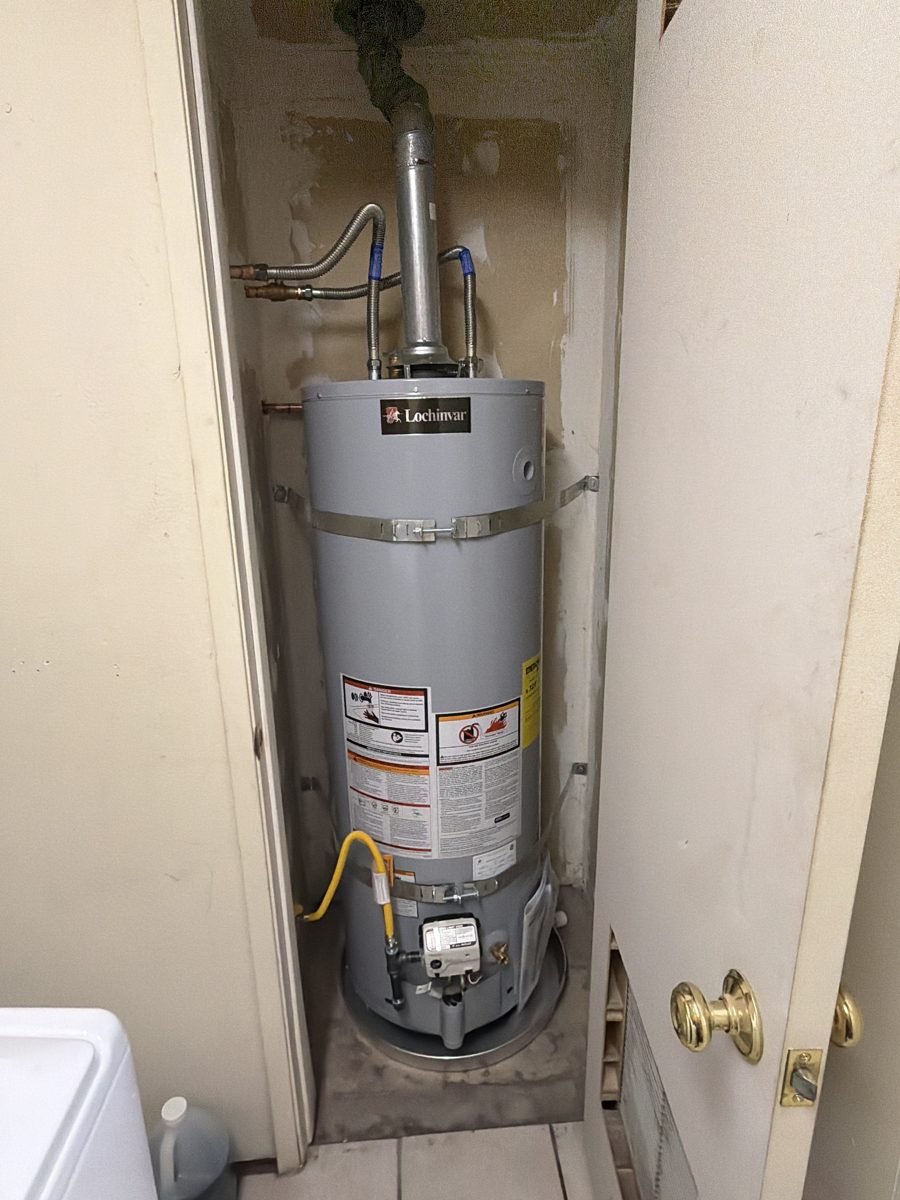
In most of the country, a water heater sits in a basement or a utility closet at a mild temperature. In the Las Vegas Valley, it usually sits in the garage, and on a July afternoon a closed garage here can climb well past 110°F. Add some of the hardest water in the country and you have a water heater working in tough conditions all year long.
Jason Miller has more than 24 years of plumbing experience, and he’ll tell you the same thing he tells every homeowner: most early water heater failures here come down to heat, scale and neglect. The good news is that the neglect part is easy to fix.
What the Desert Does to a Water Heater
Hard water turns into sediment
Valley water carries a lot of calcium and magnesium. When a tank heats that water, minerals drop out and settle on the bottom. Year after year, that layer gets thicker. On a gas heater, the burner has to push heat through the sediment, so the steel at the bottom runs hotter than it was designed to. On an electric heater, the lower element can get buried in scale and burn out.
Garage heat adds stress
Summer garage temperatures mean the tank, gas valve, venting and plastic parts live in constant heat. Hot ambient air doesn’t make the burner fire more, but it ages rubber seals, the drain valve, pressure relief valves and wiring faster. Many garages also hold the softener, the main shut-off and the expansion tank, so one small leak can reach several systems.
Thermal expansion
Most valley homes have a pressure regulator or a check valve at the main line. When water heats up, it expands and has nowhere to go, so pressure spikes inside the tank and the home’s piping. A properly sized and charged thermal expansion tank absorbs that. A waterlogged or missing expansion tank is something we find often on service calls, and it’s hard on the heater, faucets and toilet fill valves.
How Flushing Works
Flushing simply drains the sediment out of the bottom of the tank. Here’s the basic process for a standard tank heater:
- Turn the heater to “vacation” or “pilot” (gas), or switch off the breaker (electric).
- Shut off the cold water supply to the heater.
- Connect a garden hose to the drain valve and run it to the driveway or a floor drain. The water will be very hot.
- Open a hot water faucet inside the house so the tank can drain.
- Open the drain valve and let it run until the water comes out clear. Briefly turning the cold supply on and off can stir up stubborn sediment.
- Close the drain, refill the tank completely with a hot faucet open until water flows steadily, then restore gas or power.
Be careful: On older tanks, the plastic drain valve can be brittle and may not close again once opened, or it can clog with sediment and drip. If your heater is 8–10+ years old and has never been flushed, it’s reasonable to have a plumber do the first flush so a stuck valve doesn’t turn into a garage full of water.
How Often Should You Flush in Las Vegas?
With valley water, once a year is a good baseline for tank heaters. If you have a lot of people in the house, or no softener, consider every six to nine months. A home with a working softener can usually stretch to every year or so.
Tankless Water Heaters Need Descaling, Too
Tankless units don’t collect sediment in a tank, but scale builds up inside the heat exchanger. The fix is a descaling flush: isolation valves let a small pump circulate a descaling solution through the unit, usually once a year here. If your tankless doesn’t have isolation (service) valves, adding them makes yearly maintenance much simpler. Error codes, fluctuating temperature or reduced hot water flow are often signs it’s overdue.
Signs Your Water Heater Needs Attention
- Popping, rumbling or crackling while it heats
- Rusty or cloudy hot water
- Water at the base of the tank or around the relief valve drain
- Hot water running out faster than it used to
- A gas smell near the heater (leave the area and call the gas company right away)
- The heater is 10–12 years old with no maintenance history
What About Hot Water That Takes Forever?
Many valley homes are long and single-story, with the heater in the garage on one end and the primary bathroom on the other. A recirculation pump keeps hot water near the fixtures so you’re not running gallons down the drain waiting for it. That matters in a desert where water conservation is a way of life. Some systems use a dedicated return line, and others use the cold line with a valve under the farthest sink.
Frequently Asked Questions
Can I flush my water heater myself?
Yes, if the heater is fairly new and the drain valve works well. On older tanks that have never been flushed, a plumber can handle a stuck or brittle valve if it fails.
Does a softener mean I never need to flush?
No, but it greatly slows sediment buildup. You can usually flush less often.
Is tankless better for Las Vegas?
It depends on your household size, gas line size, venting and how you use hot water. See our water heater and tankless services. Tankless saves space and gives endless hot water, but it needs yearly descaling here. We’ll walk you through both options honestly.
What does an expansion tank do?
It absorbs the extra volume when water heats up so pressure doesn’t spike in your plumbing. Most valley homes with a pressure regulator need one.
Noisy tank, lukewarm showers or a heater that’s never been flushed? Las Vegas Water Experts services and installs tank and tankless water heaters, expansion tanks and recirculation pumps across Henderson and Las Vegas. We’re family owned, licensed, bonded and insured, and available 24/7. Call 702-577-5505. NV LIC# 0095727. Prefer to write? Use our contact page.
Leave a Reply