If you’ve lived in the Las Vegas Valley for more than a few months, you’ve seen it. There’s a chalky white ring around the faucet base and spots on every glass that comes out of the dishwasher. The shower head sprays sideways because half its holes are plugged. Nothing is wrong with your house. That’s our water.
Jason Miller has spent more than 24 years doing plumbing work, and a big share of the problems he sees here start with minerals. Here’s what’s actually happening and what you can do about it.
Why Las Vegas Water Is So Hard
Most of the valley’s tap water comes from Lake Mead, which is fed by the Colorado River. On its way here, that water runs across hundreds of miles of limestone and mineral-rich desert rock. It picks up calcium and magnesium the whole way. By the common industry scale, anything over about 10.5 grains per gallon counts as “very hard,” and valley tap water is far above it: in our experience it typically measures between 17 and 25 grains per gallon, and around 22 is a common reading in the homes we service. Your water provider’s annual water quality report lists the current numbers for your area.
The water is safe to drink and meets federal standards. Hardness is a plumbing and appliance problem, not a health problem. But it’s a constant one, because those minerals come out of the water as scale whenever it’s heated or left to evaporate.
Where Scale Does the Most Damage
Your water heater
Heat drives minerals out of the water faster than anything else. In a tank heater, scale settles to the bottom as a gritty layer of sediment. The burner or lower element has to heat through that layer, so the tank runs longer and louder. You’ll hear popping or rumbling, and over time the tank bottom can overheat and fail early. Tankless units get scale buildup inside the heat exchanger, which triggers error codes and lukewarm water.
Faucets, cartridges and shower valves
Scale stiffens cartridges and wears out O-rings, which is why valley faucets often start dripping or get hard to turn sooner than you’d expect.
Angle stops and shut-off valves
The small valves under sinks and toilets sit closed-off and unused for years. Minerals lock them in place, so when you finally need to shut one off during a leak, it won’t turn. Or it snaps. (See our article on angle stop replacement.)
Toilets, dishwashers and ice makers
Fill valves stick, toilets run, and dishwasher spray arms clog. Refrigerator lines and ice maker valves collect scale too.
Softener, Filter or Reverse Osmosis: What’s the Difference?
People use these words interchangeably, but they do different jobs.
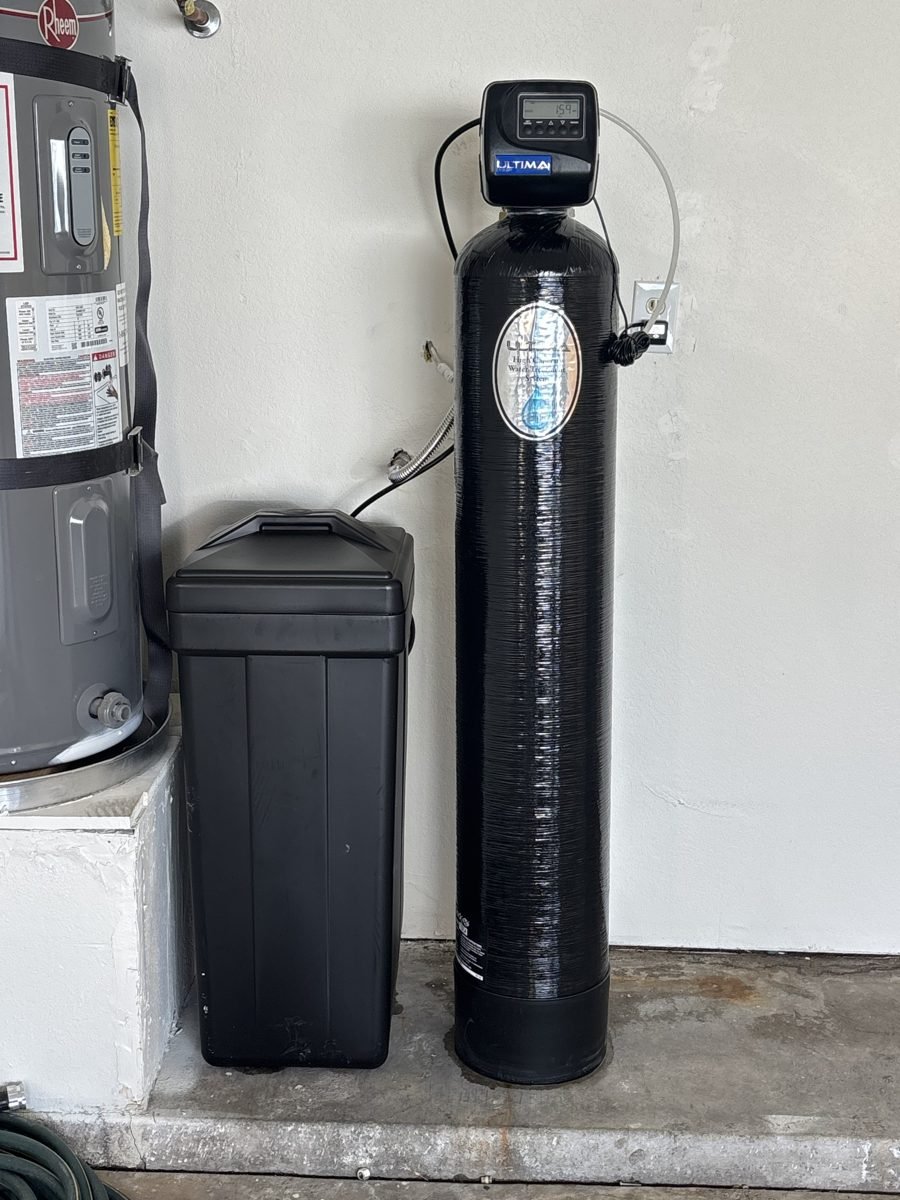
- Water softener (salt-based ion exchange): Removes calcium and magnesium from all the water coming into the house. This is the one that actually protects your water heater, fixtures and valves from scale.
- Salt-free conditioner: Changes how minerals behave so they’re less likely to stick. It doesn’t remove them. Some homeowners like the lower maintenance, but results vary and it won’t give you the “soft water” feel.
- Whole-house carbon filter: Reduces chlorine/chloramine taste and odor. It doesn’t soften.
- Reverse osmosis (RO): Usually a single under-sink system for drinking and cooking water. It takes out most dissolved solids, so it’s great for taste and coffee. It isn’t a whole-house hardness fix.
Many valley homes do best with a softener for the whole house plus an RO system at the kitchen sink. Before recommending anything, we look at how many people live in the home, the plumbing layout, whether there’s an existing softener loop in the garage, and how much maintenance you want to do.
Signs Your Home Needs Help With Hard Water
- Popping or rumbling from the water heater
- Shower heads and aerators that clog every few months
- Faucets that drip again soon after a repair
- A tankless unit showing scale or flow error codes
- White crust on the outside of pipe fittings and valves
- Dry skin and dull hair after showers (common feedback from new arrivals)
Simple Things You Can Do Now
- Soak aerators and shower heads in white vinegar for an hour, then rinse.
- Flush your tank water heater about once a year to clear sediment. Our water heater flushing article walks through it.
- Turn every angle stop under sinks and toilets a quarter turn and back once or twice a year so they don’t seize.
- Check your softener salt monthly if you already have one. A softener with an empty brine tank is just a tank.
When to Call a Plumber
If you’re replacing a water heater, a softener protects the new one. If you have a softener that’s 10+ years old, leaks at the bypass, or never seems to regenerate, it’s worth a look. And if valves are already seized, have them replaced before they’re needed in an emergency.
Frequently Asked Questions
Is Las Vegas tap water safe to drink?
Yes. It meets federal drinking water standards. Hardness affects taste, appliances and plumbing, not safety. Many people add an RO system for better-tasting drinking water.
Will a water softener make my water salty?
Not noticeably. A properly set softener adds a small amount of sodium. If you’re watching sodium, an RO faucet at the kitchen sink removes most of it from drinking water.
Can I install a softener if my home doesn’t have a softener loop?
Usually, yes. A loop can often be added at the main line, typically in the garage. We look at the layout first and explain the options.
How often should a softener be serviced?
Check salt monthly, and have the system looked at every year or two, or sooner if water starts feeling hard again.
Tired of fighting scale? Las Vegas Water Experts is a family owned and operated, licensed, bonded and insured plumbing company serving Henderson and the whole Las Vegas Valley. Call 702-577-5505 to talk with Jason about a softener, filtration or RO setup that fits your home. NV LIC# 0095727. Prefer to write? Use our contact page.
Leave a Reply