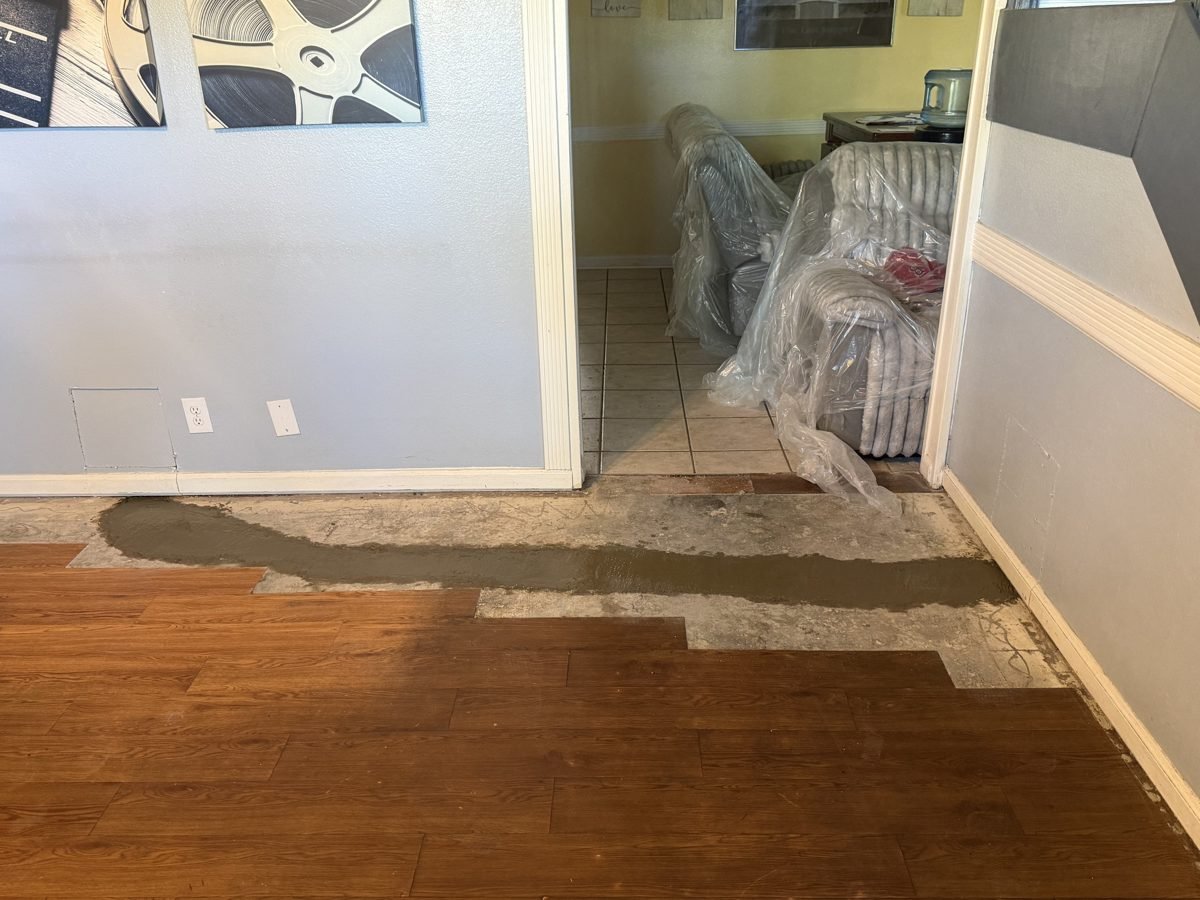
Nearly every home in the Las Vegas Valley is built on a concrete slab, with water lines running under or through it. When one of those lines springs a leak, you can’t see it. The water just goes into the soil under your house, sometimes for weeks before anyone notices.
Slab leaks are one of the calls we take most seriously. With 24+ years of plumbing experience behind him, Jason Miller has seen plenty of them, from small pinholes to lines that have been leaking long enough to soften the ground. Here’s how to spot one early and what your options are.
Why Slab Leaks Happen Here
Hard water wears pipes from the inside
Valley water carries heavy mineral content. Over decades, scale buildup and water flow wear on copper, especially at bends and where hot water lines run. Pinholes often show up on hot lines first, because heat speeds the process along.
Desert soils move
Parts of the valley, including areas of Henderson and the east side, have expansive clay soils that swell when wet and shrink when dry. Other neighborhoods sit on caliche, a cement-like hardpan layer. Either way, the ground shifts with irrigation cycles, monsoon rains and seasonal changes. Pipes that rub against concrete, gravel or rebar can wear through over time.
Installation and age
Homes built in the 1970s through the 1990s often have copper under the slab that’s now 30+ years old. Fittings, poor bedding or a pipe resting against the slab edge can all contribute.
Water pressure
High static pressure, often from a failed pressure regulator, puts extra stress on every joint in the house.
Warning Signs of a Slab Leak
- A warm or hot spot on the floor, especially tile, often from a leaking hot water line
- The sound of running water when everything is off
- A water bill that jumps with no change in your habits
- The water heater running constantly (a hot line leak means it’s always refilling)
- Damp carpet, swollen baseboards or warped wood flooring with no visible source
- New cracks in tile or the slab
- Mildew smell in one area of the house
- Low water pressure throughout the home
A Simple Meter Test You Can Do Today
- Turn off every faucet, appliance and irrigation in and around the house.
- Find your water meter. It’s usually in a concrete box near the curb.
- Look at the leak indicator, a small triangle or dial. If it’s spinning, water is moving somewhere.
- To narrow it down, shut off the house main valve (often in the garage or on an outside wall). If the meter stops, the leak is in the house. If it keeps moving, the leak may be in the line between the meter and the house, or in irrigation.
This isn’t a diagnosis, but it tells you whether it’s time to call.
How Slab Leaks Are Found
Professional leak detection uses tools like acoustic listening equipment, thermal imaging and pressure testing to isolate which line is leaking and roughly where, before any concrete is touched. The goal is to open as little as possible.
A note about post-tension slabs: Many valley homes are built on post-tension slabs, with steel cables under extreme tension inside the concrete. Cutting or drilling into one without locating those cables can be dangerous and very costly. This is one reason slab work should never be a DIY project.
Repair Options
There isn’t one right answer. It depends on the age of the plumbing, how many leaks the home has had, and where the leak is.
Spot repair
Open the slab at the leak, repair the section, and patch the concrete. It makes sense for a first leak in otherwise healthy pipe.
Reroute
Abandon the leaking line under the slab and run a new line through the attic or walls. This avoids breaking concrete and is often the cleaner long-term fix for a single line.
Repipe
If the house has had two or three slab leaks, the rest of that original copper is likely in similar shape. A whole-house repipe, usually with PEX run overhead, replaces the old under-slab system entirely. It’s a bigger project, but it ends the cycle of leaks.
We explain which option fits your house and why, and you make the call.
What To Do Right Now If You Suspect a Slab Leak
- If water is visibly coming up or flooding, shut off the main water valve.
- If a hot line is suspected, turn off the water heater’s cold supply and set it to vacation or pilot.
- Take photos of damage for your records and insurance.
- Call a licensed plumber. For active flooding, see our 24/7 emergency service.
Frequently Asked Questions
Does homeowners insurance cover slab leaks?
It varies by policy. Some cover the access and resulting water damage but not the pipe itself. Check with your agent, and keep photos and records.
Will you have to tear up my floors?
Not always. Accurate detection keeps openings small, and a reroute can avoid the slab altogether.
Is PEX good for Las Vegas?
PEX handles the valley’s hard water well because scale doesn’t eat it the way it can wear copper. It’s flexible and commonly used for reroutes and repipes here.
Can a slab leak cause foundation damage?
Long-term leaks can saturate soil under the slab, and expansive soils can move as a result. That’s why it’s worth acting quickly.
Warm spot on the floor or a meter that won’t stop spinning? Las Vegas Water Experts handles slab leak repair, reroutes and whole-house PEX repipes across Henderson and the Las Vegas Valley. We’re family owned, licensed, bonded and insured, and answer 24/7. Call 702-577-5505. NV LIC# 0095727. Prefer to write? Use our contact page.
Leave a Reply