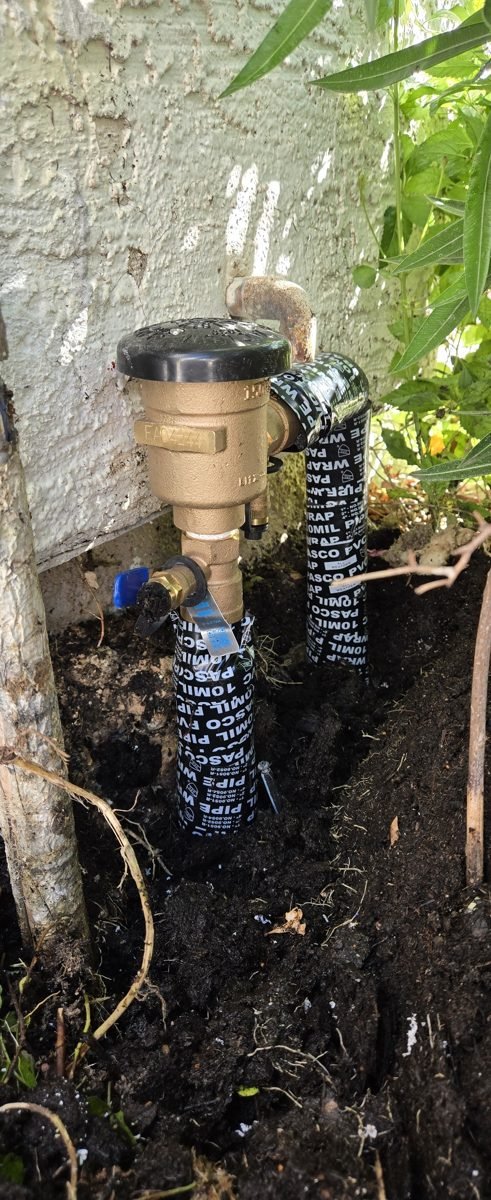
People are surprised to hear it, but the Las Vegas Valley gets hard freezes. Most winters bring a handful of nights below 32°F, especially in December and January, and outlying areas and higher spots like the west and northwest valley can drop lower than the Strip. Homes here aren’t built for cold the way homes back East are. Pipes often run outside, along exterior walls or in uninsulated spaces.
The result is a predictable wave of calls after every cold snap: cracked backflow preventers, split hose bibs and burst irrigation lines. Jason Miller has spent 24+ years in plumbing, and most of those calls are preventable with an hour of prep in November.
Which Pipes Are Most at Risk in the Valley
Backflow preventers
That brass assembly sticking out of the ground near your front landscaping is a backflow preventer for your irrigation system. It’s fully exposed, full of water, and one of the most common freeze casualties in town. When it freezes, the brass body or internal parts can crack, and you won’t see a leak until it thaws.
Hose bibs (outdoor spigots)
Standard hose bibs hold water right at the exterior wall. A hose left connected traps water in the bib and makes a split far more likely.
Exposed pipes on the side of the house
Water heater lines in garages, softener loops, pool and spa equipment plumbing, and supply lines running up exterior walls are all vulnerable.
Irrigation lines and drip systems
Shallow PVC and drip tubing can crack. Valves and timers mounted above ground take a hit too.
Pool and spa equipment
Most pool systems have freeze protection mode, but it only works if the pump and controller are working.
Attic lines
Some homes, especially those that have been repiped overhead, have water lines in the attic. These should be properly buried in insulation on the living-space side.
Your November Freeze-Prep Checklist
- Insulate the backflow preventer. Use an insulated pouch or cover made for backflows, and make sure it covers the whole assembly, including the exposed pipes going into the ground.
- Disconnect garden hoses from every hose bib and drain them.
- Cover hose bibs with foam faucet covers.
- Wrap exposed pipes with foam pipe insulation, especially on north-facing walls and in garages. Seal the seams with tape.
- Know where your main shut-off is, and make sure it actually turns. If it’s seized from hard water, now’s the time to have it replaced, not at 2 a.m. with water spraying.
- Check your water heater’s garage location. Gaps around the garage door let cold air pour in. Keeping the garage door closed on cold nights helps.
- Adjust irrigation timers for winter. Southern Nevada’s seasonal watering schedule calls for less watering in winter anyway, and avoiding pre-dawn runs on freezing nights helps prevent icy sidewalks and frozen lines.
On the Coldest Nights
- Let a faucet drip on an exterior wall if you have pipes you’re worried about. Moving water is less likely to freeze.
- Open sink cabinet doors on exterior walls so warm air can reach the pipes.
- Keep the thermostat steady, even if you’re traveling. Don’t set the heat far below normal when you’re away.
- For pools, confirm freeze protection is turned on and the pump runs when it should.
If a Pipe Freezes
- No water from a faucet? A line may be frozen. Keep the faucet open.
- Warm the pipe gently with a hair dryer or space heater kept at a safe distance. Never use an open flame or torch.
- Look for cracks or bulges before the line thaws. A frozen pipe often doesn’t leak until it warms up.
If a Pipe Bursts
- Shut off the main water valve immediately.
- If the leak is near electrical outlets or appliances, turn off power to that area at the breaker if it’s safe to reach.
- Turn off the water heater (gas to pilot or vacation, electric breaker off) if the main is off for an extended time.
- Move belongings, take photos, and start drying. Our water damage response page covers next steps.
- Call a 24/7 plumber.
For a split backflow preventer, the irrigation side can usually be isolated so you still have water in the house. Look for the shut-off valve on the supply line before the backflow device.
Frequently Asked Questions
How cold does it have to get for pipes to freeze in Las Vegas?
Exposed pipes are at risk when temperatures drop into the 20s for several hours, especially with wind. A night just touching 32°F is less likely to cause damage, but backflow preventers and hose bibs can still be affected.
Do I need to cover my backflow preventer every winter?
Yes. It’s one of the most commonly damaged outdoor plumbing parts in the valley after a freeze, and a cover is inexpensive insurance.
Should I turn off my irrigation in winter?
Not necessarily. Follow the winter watering schedule, and avoid running it during the coldest hours of a freezing night.
Will homeowners insurance cover a burst pipe?
Many policies cover sudden water damage from a burst pipe. They may not cover damage caused by long-term neglect. Check your policy.
Burst pipe, cracked backflow or a frozen line? Las Vegas Water Experts answers 24/7 across Henderson and the Las Vegas Valley. We’re family owned, licensed, bonded and insured. Call 702-577-5505. NV LIC# 0095727. Prefer to write? Use our contact page.
Leave a Reply